
If you’re looking at Greater Boston as one market, you’re going to misjudge it. The quarter that ended June 30 really breaks into three separate stories. Industrial is strong. Office is steadying but not bouncing back. Life sciences is still working through too much space. I’ve watched these sectors move together and apart for years, and this is the widest they’ve diverged in some time. Here’s where each one landed and what it means for the rest of the year.
Industrial Was the Standout
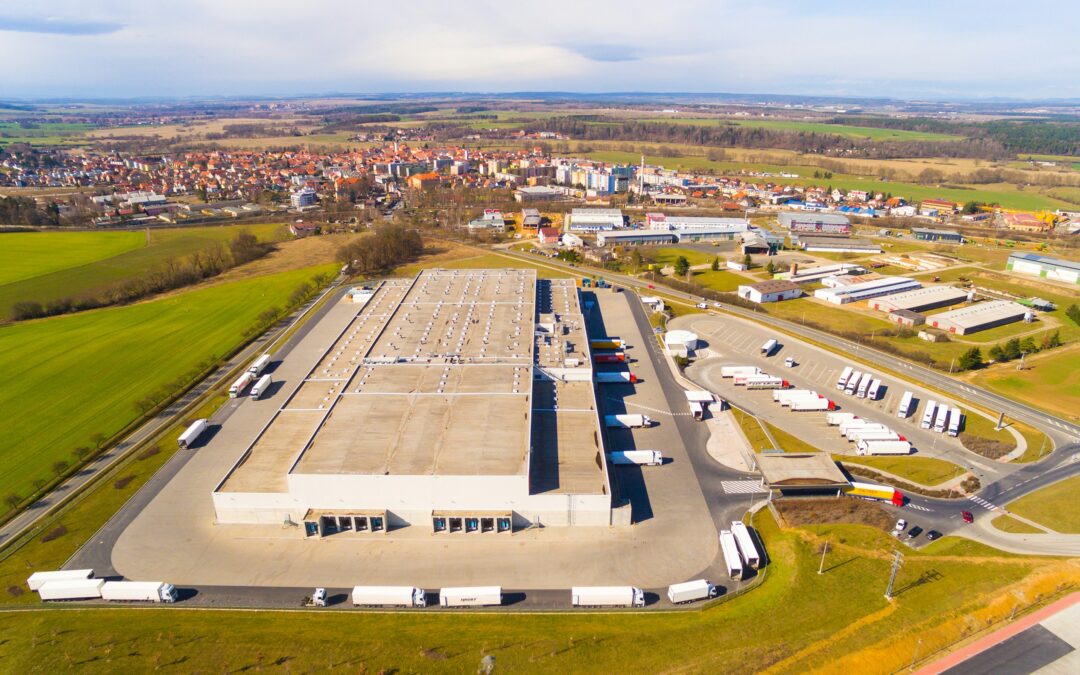
Industrial carried the quarter. Cushman & Wakefield put leasing at 2.0 million square feet, the second strongest quarter in nearly four years, behind only Q1. First half volume more than doubled what we saw over the same period in 2025. That’s not a seasonal blip, that’s demand catching up to a region that under built distribution space for a decade.
Rents moved with it. Direct asking rents rose 8.0 percent year over year to a record $16.06 per square foot. The one thing to watch is vacancy, which climbed to 12.4 percent as new buildings delivered. That combination, record rents alongside rising vacancy, tells you the market is absorbing supply rather than choking on it, but only in the right places. Submarket choice is the whole game. Route 495 and Route 146 are leading absorption, and that’s where the fundamentals hold up. The infill closer to the core is tighter and will stay that way, because you can’t build new industrial inside Route 128 at any price that pencils.
Office Is Steadying, Not Rebounding
Office leasing hit 1.7 million square feet, bringing first half volume to 3.4 million. Eight of the region’s 19 submarkets each cleared 100,000 square feet, so demand has broadened past the trophy towers. Savills clocked a notable Q2 signal here, Autodesk’s 73,400 square foot renewal in the Seaport, the kind of mid size commitment that tells you tenants below the marquee names are transacting again.
The vacancy figure rewards a closer read. It rose 30 basis points to 19.0 percent, but that was the smallest quarterly increase in more than a year. Downtown gave back space while most suburban clusters gained. The trend that’s held since 2023 is intact. Class A is winning and Class B keeps losing ground, quarter after quarter. That split is the entire thesis. Trophy space in the Seaport, Back Bay, and the core Financial District still trades, supported by commitments at South Station Tower and Winthrop Center. Class B in weaker locations is either repricing sharply or heading toward conversion, and it’s only worth buying if you can run an adaptive reuse and wait it out.
Conversions Are Changing the Downtown Picture
That Class B exit now has a real path, and it’s further along than most investors realize. Mayor Wu’s Office to Residential Conversion Program offers a 75 percent tax abatement for 29 years, as of right downtown zoning, and a streamlined Article 80 review. By late June it had roughly 28 projects in the pipeline, together adding more than 1,800 units. The Planning Department expects the program to pull more than 1.5 million square feet of vacant office off the market, about 20 percent of the city’s Class B and C stock. That last number is the one to sit with, because removing a fifth of the weakest inventory is what actually stabilizes the office metrics everyone keeps watching.
The proof is on the ground now, not just on paper. 281 Franklin Street, the first completed project, is fully leased with studios around $3,150. The largest approved so far, at 280 through 300 Washington Street in Downtown Crossing, will deliver 255 homes including 52 income restricted units. For investors this cuts two ways. Conversions strip obsolete space out of circulation, which supports the quality stock that’s left, and they hand Class B owners an exit that office economics alone no longer provide. Watch the clock, though. To capture the abatement you have to pull permits and start construction by December 31, 2027. And the physical reality still governs, since deep floor plates, window access, and the cost of bringing a pre war building to residential code will kill a project that doesn’t underwrite cleanly. High conversion feasibility is a building specific question, not a market wide one.
Life Sciences Is Still Digesting
Life sciences is the hardest sector right now, and it’s hard here precisely because Boston and Cambridge are the largest lab cluster in the country. When the correction came, it landed heaviest on the market that expanded the most. Vacancy reached a record 34.9 percent, driven largely by increased availability along Route 128. Direct asking rents eased to $80.31 per square foot, though Cambridge held its premium at $92.07, which tells you the flight to quality dynamic runs through lab space the same way it runs through office.
There’s one signal cutting the other way. Renewals hit their highest level since Q2 2025. Tenants are recommitting, they’re just not expanding, with new leasing soft at around 367,000 square feet. That’s a market resetting to a sustainable baseline, not one in free fall. Underwrite a slow grind, and pay attention to the venture funding trend, because lab demand follows capital formation with a lag and that’s the leading indicator worth tracking into 2027.
Rent Control Came Off the Table
The quarter’s biggest policy question got settled, and it went in owners’ favor. On June 23 the Supreme Judicial Court struck the statewide rent control measure from the November ballot, ruling that its religious exemption made it an improper subject for the initiative process, a technical defect rather than a judgment on the policy itself. The measure would have capped annual increases at inflation or 5 percent, whichever was lower. For now it’s off the table across all 351 cities and towns.
Read the mechanism, not just the headline, because the mechanism tells you what comes next. The court struck the question on how it was drafted, not on what it proposed, and the campaign has already called the flaw fixable. Supporters collected well over 100,000 signatures and had some real estate groups coming to the table on a compromise before the ruling stopped the talks. That’s a reprieve, not a resolution. I’d underwrite multifamily as if some form of rent stabilization returns to the conversation within the next cycle, whether through a cleaner petition or a local option bill out of the statehouse.
The Residential Backdrop
The housing market sets the tone for the capital environment, and it reads flat and steady rather than falling. The Warren Group put the May statewide median single family price at $665,000, essentially flat year over year on lighter volume. Greater Boston single family medians are above $1 million and condos sit near $750,000. The 30 year fixed stayed in the mid 6 percent range through June, still high enough to keep sidelined inventory locked up. That’s the golden handcuffs problem in one line, and until rates break below 6 percent, expect the same standoff. Steady demand, no surge.
What to Price In
A few things belong in the model. Industrial supply could outrun demand in the weaker submarkets, so don’t extend record rents across the whole region. Office stays quality driven and slow, though conversions now give Class B a genuine way out and quietly improve the metrics for everything that remains. And rent control is off the ballot but not off the table, so stress test your multifamily underwriting against its return.
The quarter comes down to one point. Companies are still making long term commitments in Greater Boston, they’re just being selective about where and how much. The market is rewarding discipline right now. Your underwriting should show the same.
David J. Murphy is the Managing Attorney of Murphy PC, a Boston-based real estate and business law firm, and is Of Counsel to McDermott, Quilty, Miller & Hanley LLP. With over 20 years of experience, David counsels developers, sponsors, owners, and investors in commercial real estate transactions throughout New England and other states, with a focus on joint ventures, preferred equity, and complex deal structuring. He can be reached at dmurphy@murphypc.com or 617-993-0650.
Sources: Cushman & Wakefield and Savills Q2 2026 Boston reports, The Warren Group, the City of Boston Planning Department, and the Massachusetts SJC ruling of June 23, 2026.
Forward looking statements (rate thresholds, the return of rent stabilization, and venture funding as a lead indicator) reflect the author’s judgment, not reported fact.
This article is for general informational purposes only. It is not legal, financial, or investment advice and does not create an attorney-client relationship. Market data comes from third-party sources and may change. Consult a licensed attorney before acting on anything discussed here. This may constitute attorney advertising.