
Overview
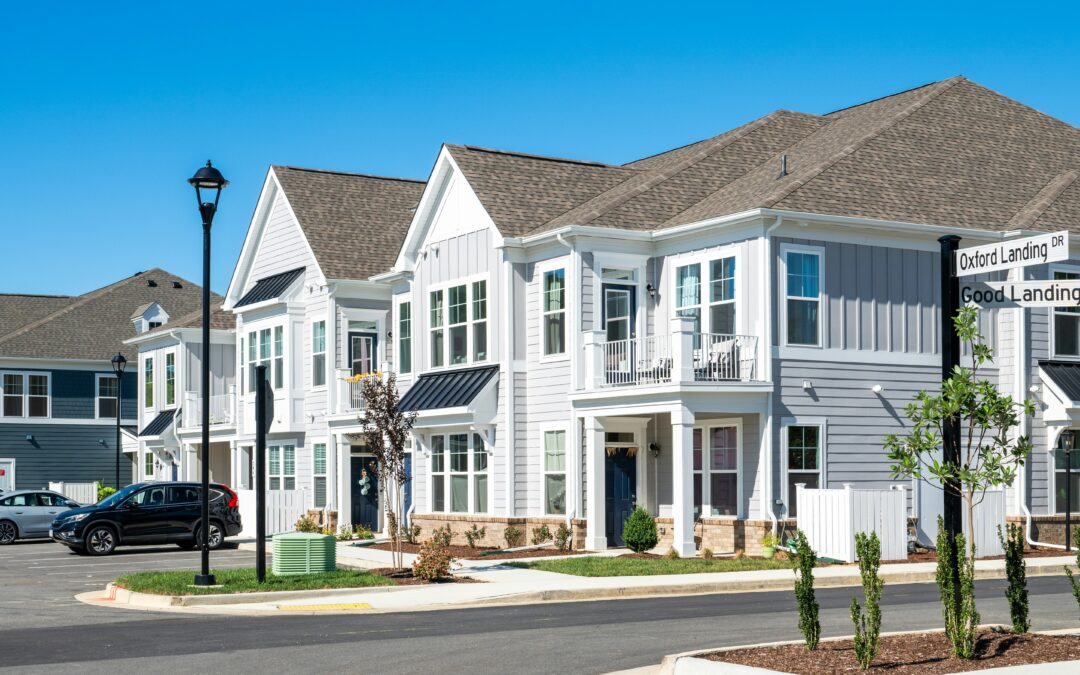
We represented a developer client in the creation and build out of a phased townhome condominium. Our work included drafting the master deed, the declaration of trust, the bylaws, and the rules and regulations, advising the client through the sale of units, and handling the turnover of the association to the owner elected trustees. The community opened as a single building of eight townhomes and was structured to expand toward a permitted maximum of 112 units. Over the course of the engagement the community was built out, the units were sold, and control of the association passed to its owners.
This case study describes how the documents were structured, the protections they provided to the developer, the easement structure that allowed construction and occupancy to proceed together, and the governance framework that carried the community into owner control.
The Challenge
Our client set out to build a townhome community that was too large to construct or finance in a single undertaking. The client needed to open with a manageable first phase, sell it, and add later phases as the market absorbed the product, all while retaining control over the timing and size of each phase. The documents had to give the developer that control in an enforceable form, keep the homes eligible for conforming financing throughout the sales period, and leave behind a governance structure the owners could operate after the developer’s involvement ended.
The Structure
Phasing and reserved rights
We recorded a first phase of eight two story townhomes, each with a kitchen, living and dining rooms, two bedrooms, two baths, a loft, and a garage, offered in intermediate and end unit styles. The master deed reserved the developer’s right to add later phases toward the permitted maximum of 112 units. Because the documents fix a maximum number of units rather than a set number of phases, and require only that each future phase contain at least one building, the developer retained control over how many phases to build and how large each would be.
We reserved the phasing right for a stated period, expiring on the earliest of a fixed term measured from recording, the community reaching its 112 unit maximum, or a voluntary release by the developer. We drafted the reservation to permit the developer to shorten that period if secondary mortgage market guidelines required it, so the project would remain eligible for conforming financing.
A self executing amendment mechanism
When a phase was ready, the developer added it by recording amended plans, an amended unit schedule, and a restated table of percentage interests on its own signature, without the signature of any owner, trustee, or mortgagee. To support that mechanism, we reserved the phasing right in the master deed, recited in every unit deed that the community is phased and that percentage interests may change, and excluded phasing amendments from the ordinary owner approval requirements that govern other amendments. A phasing amendment was conclusive when recorded.
Percentage interest recalculation and advance consent
Adding units reduces every existing owner’s percentage interest, which controls both the owner’s share of common expenses and the owner’s vote. Percentage recalculation is a common point of dispute in phased projects. We addressed it with a value based formula under which each unit’s interest is the fraction its value bears to the aggregate value of all units, recalculated at each phase, and we obtained each owner’s consent to that recalculation in the deed the owner accepted. Setting out the formula and the consent in the recorded documents gave the developer a clear basis for each recalculation.
A power coupled with an interest
By accepting a deed, each owner appointed the developer as attorney in fact, with a power coupled with an interest, to execute phasing amendments on the owner’s behalf. Because that power secures the developer’s interest in completing the project, it is irrevocable. If any question ever arose as to whether an owner signature was required on a phasing instrument, the developer already held the authority to supply it.
The Easement Structure
A phased community supports three activities on one parcel at the same time. People live there, the association maintains the property, and the developer continues to build. We recorded one set of easements so that all three could proceed as the community grew.
Every owner received appurtenant easements to use the streets, walkways, and shared entries, and to use the pipes, wires, conduits, and utility lines that run through the buildings and serve the unit. The association received reciprocal access easements to enter units and common areas to inspect, maintain, and repair the shared systems. The developer reserved broad construction easements, including the right to bring workers, vehicles, and equipment onto the common areas to build later phases, to install, relocate, and connect utilities and infrastructure, to store materials, and to conduct sales and marketing from unsold units and the grounds, together with the right to grant further easements as construction required.
Because a condominium does not permit separately subdivided lots, we handled the private outdoor areas through limited common areas. Driveways to each garage, patios, front stoops, porches, and decks were assigned for the exclusive use of the units they serve, and parking spaces were structured so the developer could assign exclusive use by easement, unit by unit. This gave buyers the private driveway and outdoor space they expect while the association retained the underlying land, and it preserved the developer’s ability to assign these areas to units in later phases. Each of these rights was recorded at the outset and runs with the land, so the developer had the access it needed to complete the community.
The Governance Framework
Maintenance allocation
We allocated maintenance responsibility in the master deed. Owners maintain their unit interiors and the equipment that serves only their unit. The association maintains the structure, the roofs, and the exteriors as a common expense. We addressed the harder allocations specifically, defining windows and exterior doors as part of the unit but maintained by the association at the owner’s expense, so the buildings keep a uniform appearance while the cost remains with the owner who benefits. Because these responsibilities are set out in the recorded documents, owners and trustees can determine who is responsible by reference to the document.
The association and its finances
We established the owners’ association through a declaration of trust funded by common charges, with reserves funded from the initial sale of units. We created a design review process so the community retains its intended appearance as owners make changes over time, and we adopted a set of rules and regulations governing parking, pets, exterior changes, leasing, and conduct, each enforceable by the trustees with a hearing process for owners.
Secondary market compliance
We included the secondary market protections the agencies require, including mortgagee notice and access rights, lien subordination consistent with the statute, and the higher owner and mortgagee approval percentages required for specified actions such as changes to voting, assessments, reserves, and unit boundaries. These provisions kept the homes eligible for conforming financing throughout the sales period.
Transition to owner control
The developer appointed the trustees until a defined turnover event, after which the owners elected their own trustees, with the developer retaining a minority appointment right while it still held units or phasing rights. At turnover, the reserve fund, the records, and the financial statements passed to the owners. This structure protected the developer’s exit and delivered the community into owner control with the governance tools already in place.
The Result
The community was built out and sold, and the association was turned over to its owner elected trustees. The developer completed each phase by recording an amendment on its own signature, as the documents were designed to allow, and exited the project upon turnover. The governance framework, including the maintenance allocation, the design review process, the rules and regulations, and the reserve funding, remained in place for the owners to operate going forward.
Our Approach
The sequence of the drafting followed the needs of the deal. We built the phasing mechanism first, confirmed that it operated on the developer’s signature alone and was secured by an irrevocable power, and then fit the easements, the limited common area assignments, the maintenance allocation, the governance framework, and the mortgagee protections around it. Drafted in that order, the documents let the developer open with a small first phase, expand on its own schedule, and hand over a functioning community at the end of the project.
This case study is provided for informational purposes only and does not constitute legal advice. It describes a specific matter handled by Murphy PC and does not create an attorney-client relationship. Prior results do not guarantee a similar outcome; each matter depends on its own facts and circumstances. Certain details may have been modified or omitted to protect client confidentiality.
For questions about this matter or to discuss a similar transaction, contact David J. Murphy at dmurphy@murphypc.com or 617-993-0650.