
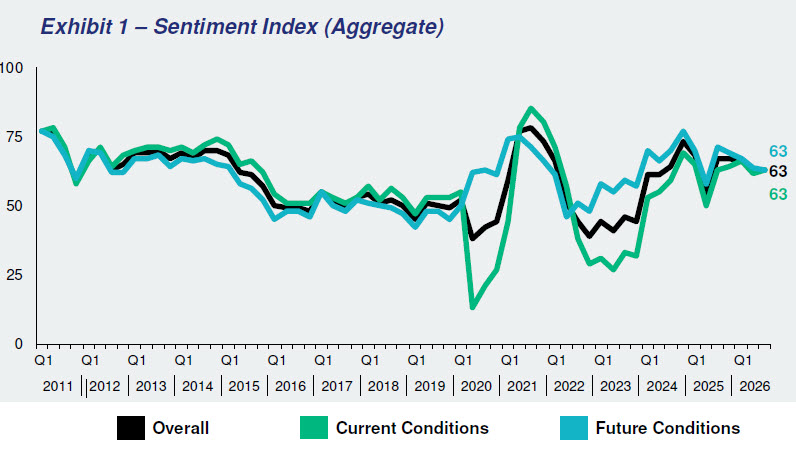
The Real Estate Roundtable’s Q3 2026 Sentiment Index holds steady at 63, as improving fundamentals and strong debt markets run up against a persistent shortage of equity capital.
Commercial real estate fundamentals are improving. Leasing is stronger, debt is easy to find, and asset values have steadied. So why aren’t more deals getting done?
The answer, according to The Real Estate Roundtable’s Q3 2026 Sentiment Index, is equity. The Index registered an overall score of 63, unchanged from the previous quarter. That flat number reflects a market pulling in two directions.
Debt Is Flowing. Equity Isn’t.
The debt side of the market is healthy. Sixty-three percent of respondents said debt availability has improved from a year ago, and only 1% said it has worsened. Values have found firmer footing, too. Eighty-eight percent said asset values are flat or higher than a year ago, and half expect them to keep rising.
Equity tells a different story. Only 35% said equity capital is easier to raise than a year ago, while 40% saw no change and 25% said conditions have worsened. High costs and cautious investors are keeping transaction volume below where the market wants it. The pieces for a deal are there, willing lenders and stable values, but not enough equity is moving to close the gap.
The Recovery Varies by Sector
Sentiment splits sharply by asset class. Data centers lead by a wide margin, powered by AI-driven demand, capital inflows, and tight supply. Retail has strengthened, helped by limited new construction and durable demand. Industrial and logistics remain attractive, though enthusiasm has cooled from pandemic highs. Multifamily is mixed, with strong long-term demand offset by oversupply and affordability pressures in some markets. Office stays bifurcated, as trophy assets gain traction while weaker markets lag.
The Roundtable View
RER President and CEO Jeffrey DeBoer said fundamentals are improving on the back of stronger leasing, healthier debt markets, and greater stability in asset values. “However,” he added, “limited equity capital and high costs continue to constrain transactions and development.”
DeBoer also pointed to data centers as the sector reshaping the market. As AI drives “unprecedented demand for reliable, affordable energy,” he said, policymakers must ensure that energy infrastructure, permitting, tax, and regulatory policies keep pace. That means expanding power generation and transmission, modernizing the grid, and protecting ratepayers while supporting continued development.
What to Watch
Market activity is stronger than the deal count suggests. The constraint to clear is on the equity side, and half of respondents expect that availability to improve over the next year. If it does, the transaction activity the fundamentals already support should follow.
RER’s Q3 survey was conducted in July by Chicago-based Ferguson Partners. The Q4 survey will be sent to members in October. Read the full Q3 2026 Sentiment Index.
This article is provided for informational purposes only and reflects the author’s views as of the date of publication. It does not constitute legal, investment, or financial advice, and does not create an attorney-client relationship. Market conditions change, and readers should consult qualified professionals before making decisions based on this information.
For questions, contact David J. Murphy at dmurphy@murphypc.com or 617-993-0650.